Running a commercial cannabis cultivation facility means managing a lot of moving parts, and HVAC is one of the most important. Temperature, humidity, and airflow all have to stay within a narrow range for plants to thrive, and that range often shifts from one growth stage to the next. Indoor growers rely on their Missouri Grow Room HVAC system to hold those conditions steady across every room, as the facility runs day in and day out.
Cultiva Systems builds HVAC equipment designed to meet the demands of commercial cultivation. If you’re planning, expanding, or troubleshooting your Missouri Grow Room HVAC, our team can help you get it right. Call us at 623-556-7598 or email [email protected] to talk through your project.
Creating Consistent Conditions Across Your Grow Room
A commercial cannabis facility is rarely just one environment. Most operations include several distinct spaces, each with its own job to do:
- Propagation or clone rooms
- Vegetative rooms
- Flowering rooms
- Drying or post-harvest areas
Each of these spaces has different temperature, humidity, and airflow requirements. A clone room needs stable, gentle conditions to support fragile new growth, while a flowering room has to manage heat and moisture from mature plants under intense lighting. Drying areas need low humidity and controlled airflow to protect the final product.
Treating the whole building as one uniform environment doesn’t work for a facility built this way. Missouri Grow Room HVAC planning has to account for how each room is actually used, and the system has to maintain the right conditions in each space without letting the demands of one room throw off another.
How Airflow Affects the Grow Room Environment
Capacity isn’t the only thing that matters in a grow room. Even a properly sized HVAC system can leave a room with uneven conditions if the air isn’t distributed well once it’s in the space.
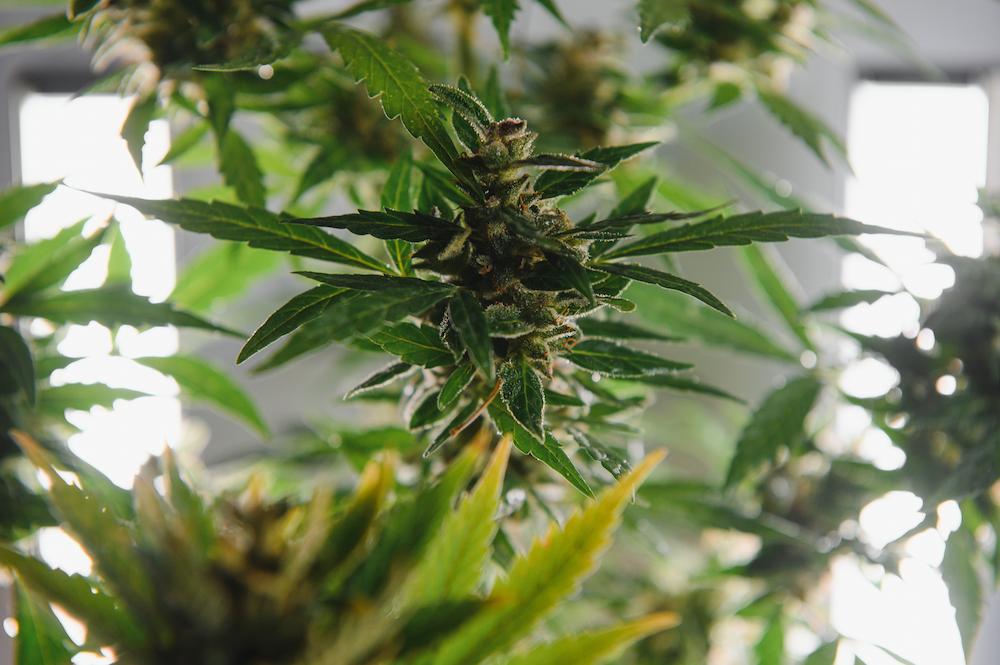 For grow room HVAC to actually work, conditioned air has to reach the canopy consistently, not just circulate near the ceiling or along the walls. Two factors drive that: how air moves through the canopy itself, and where hot spots tend to form.
Air Movement Above and Around the Canopy
Plants need moving air around them, not just conditioned air somewhere in the room. Circulation above and through the canopy keeps that air from settling in one place, which helps prevent pockets of stagnant, humid air where mold and mildew can take hold.
Avoiding Environmental Hot Spots
Lighting fixtures, rolling racks, plant density, and the layout of the room itself can all create localized differences in temperature or humidity. A row of plants close to a light bank may run warmer than the rest of the room, even when the system overall is keeping up.
Choosing a Missouri Grow Room HVAC Configuration That Fits Your Facility
There’s no single HVAC setup that works for every cultivation facility. The right configuration depends on the building itself and how the operation is laid out inside it. A few factors typically shape that decision:
- Available rooftop, ground, or indoor equipment space
- Whether the facility is new construction or an existing building
- The number and arrangement of cultivation rooms
- Access for installation and ongoing service
- Ductwork and air-distribution requirements
- Plans for future facility expansion
Every one of these affects what a workable Missouri Grow Room HVAC system looks like. The goal is equipment that fits the building and the operation, not a fixed setup that forces growers to rearrange their facility around it. Getting this right from the start makes it easier to service the system down the line and to expand later without reworking what’s already in place.
Planning for HVAC Energy Use and Long-Term Performance
Grow room HVAC systems don’t run on a typical schedule. In a Missouri commercial cultivation facility, equipment often operates for extended stretches to maintain conditions around the clock, which makes energy use and efficiency real considerations from the start. A system that performs well today should also hold up under years of near-continuous demand.
Long-term performance comes down to more than the equipment itself. How the system is designed, how accessible it is for maintenance, and how well it actually responds to the facility’s day-to-day operating conditions all factor in. Before finalizing a Missouri Grow Room HVAC system, it’s worth thinking through:
- Energy consumption
- Routine maintenance requirements
- Equipment accessibility
- Replacement parts and service availability
- How the system will handle future changes to cultivation operations
Planning for these now costs a lot less than addressing them after the system is already in place.