Indoor agriculture depends heavily on maintaining the right growing environment. Moving cannabis cultivation indoors gives you far more control over your crop, but that control comes with a catch. Temperature, humidity, and air quality all have to stay in range, day and night, through every stage of growth, and conventional commercial HVAC equipment may not be designed to handle those Missouri Indoor Agriculture demands.
Cultiva Systems provides HVAC equipment designed specifically for indoor agriculture, built around the way a cultivation facility actually operates. If you’re planning a new facility or trying to improve an existing one, we’d like to hear from you. Call us at 623-556-7598 or email [email protected].
Creating the Right Environment for Indoor Cannabis Production
Controlling the climate in a commercial cannabis facility is different than it is in an office or warehouse. Grow lights and supporting equipment throw off a surprising amount of heat, and the plants release moisture into the air. Then there’s the timeline. Temperature and humidity targets change as your crop moves through each stage of growth, so what works in week two won’t work in week eight. On top of that, you’re managing CO2 levels and trying to keep conditions consistent from one growing space to the next.
And these factors don’t operate independently. Cool a room down and its humidity shifts. Add CO2 and ventilation has to change too. Solving one problem can create another. That’s why Missouri Indoor Agriculture calls for an HVAC system designed around the cultivation process, and that’s exactly what Cultiva Systems does. We design equipment specifically to accommodate varying loads throughout the plant life cycle, so your growing environment stays steady as your crop changes.
Why Humidity Control Matters Throughout the Grow Cycle
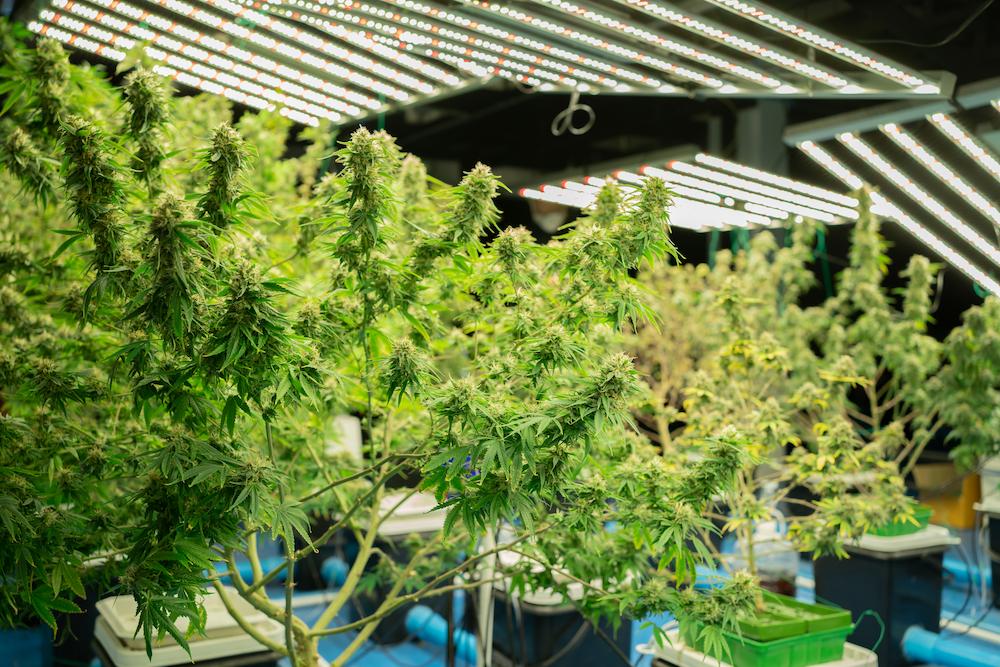 Most of the water you give your plants ends up in the air as vapor, and watering a full canopy adds up fast. Three things make that hard to manage:
- Heavy moisture loads. Dense canopies and frequent watering put a lot of water vapor into a sealed room, and it has to go somewhere.
- Shifting targets. Ideal humidity changes as plants mature, so a setpoint that suits young plants can cause problems later.
- Lights-off hours. At night, the lights aren’t adding heat, but the plants still release moisture, so the room can get cold fast while you dehumidify.
Removing moisture tends to cool the room, which can leave you paying to heat it back up. Cultiva Systems recovers heat during dehumidification, so you don’t need an extra heat source just to keep the room from getting too cold. For Missouri Indoor Agriculture, that means steadier conditions without fighting your own equipment.
HVAC Designed Around Your Missouri Indoor Agriculture Facility
Choosing equipment starts with knowing how much heat and moisture your rooms will produce at full production. That depends on a few facility details:
- Room size and canopy area. More plants and more square footage mean more cooling and moisture removal.
- Lighting. Fixture type and wattage set how much heat ends up in the room.
- Watering rate. The more water you give to the crop, the more moisture the system has to remove.
- Expected environmental loads. Together, these set the total heat and moisture the equipment has to handle.
- Building layout and installation space. Ceiling height, roof access, and open ground shape what fits.
Cultiva Systems works directly with engineers and contractors to determine the loads in your particular facility, then customizes the equipment to match. Options include rooftop, ground-mounted, vertical, and horizontal units, so the system can fit the building instead of the other way around. For Missouri Indoor Agriculture, that means equipment sized for your operation, not a generic system.
Managing Energy Use in Missouri Indoor Agriculture
HVAC can account for a big share of a cultivation facility’s electricity use, and much of it comes down to one question: are your cooling, dehumidification, and controls working together or against each other?
Many facilities run a standard air conditioner alongside a separate dehumidifier. Each responds to its own setpoint, so one can undo the work of the other, and you pay to run both.
Cultiva Systems takes a different approach. Cooling, dehumidification, and heat recovery happen in one unit, and the controls are designed together with the equipment, so fans and compressors can ramp to match what the room actually needs. Heat that would otherwise be wasted goes back into the space. That type of efficiency will save your Missouri Indoor Agriculture operation money every single month.